Go Back   Natural Medicine Talk > Health > Nutrition

Reply
 
LinkBack Thread Tools Display Modes
  #1  
Old 09-17-2012, 09:02 PM
Reader
 
Join Date: Sep 2012
Posts: 137
ChrisCarlton67 is on a distinguished road
Default How to sprout your own sprouts :)

Hi Everyone,

I've recently gotten into sprouting and want to share it with you all here.

Basically, when you sprout a seed, it becomes X times more nutritious. I'll have to dig up the actual numbers but the potency of the vitamins and the health effects are incredibly higher than in seeds form.

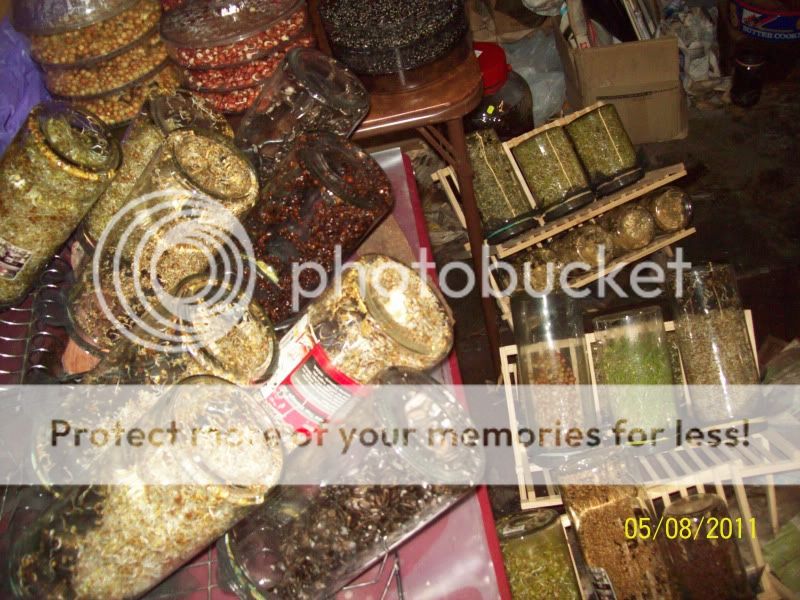
So first, what I use are red clover and alfalfa seeds. I put these in mason jars about a third or quarter way full. Then, fill with water, seal and wait over night. The next day they will be swollen. Drain the water and leave the jar on its side.

Turn the jar every few hours or so during the day (twice a day works) and after a few days (1 to 3) you will see them as sprouted alfalfa. Put them in salads, on sandwiches. I actually like to throw them in my mixed vegetable side dishes. On my potatoes even.

Try it. This works and its really good for you. You can even do this with almonds! But, they have to be raw.

Some of you may already know about this. I'm new at the sprouting game myself, but have been into nutrition for years.

If you have experience please share them here!

And, please, feel free to ask any questions as well

Warm Wishes and Best Health,
Chris
Reply With Quote
  #2  
Old 09-18-2012, 04:00 PM
Solstice Goat's Avatar
Frater Aegagrus
 
Join Date: Aug 2012
Location: Seattle, WA
Posts: 1,233
Solstice Goat will become famous soon enough
Default

I have a Bio Snacky sprouter and feel it works well. The mason jar method is a excelent way to get sprouting, for sure!
__________________
I'd rather meander for the prevention than race for the cure.
Reply With Quote
  #3  
Old 09-25-2012, 12:27 PM
Observer
 
Join Date: Aug 2012
Posts: 34
Mindy is on a distinguished road
Default

Tell us more!!
Reply With Quote
  #4  
Old 09-25-2012, 02:13 PM
Guide
 
Join Date: Sep 2012
Location: USA
Posts: 293
Living Food is on a distinguished road
Default

It seems my original (very long) post was accidentally deleted, I'll make another shorter one soon.
Reply With Quote
  #5  
Old 09-29-2012, 09:51 AM
Guide
 
Join Date: Sep 2012
Location: USA
Posts: 293
Living Food is on a distinguished road
Default

Alfalfa and clover should be sprouted for 5-6 days, and when you do that you'll only need to use 2 tablespoons for a quart mason jar - you end up with about 4 cups (half a pound) of sprouts. Immature alfalfa sprouts shouldn't be eaten, and only sprouting alfalfa and clover for 1 to 3 days means you won't get the maximum nutrition out of them.

You only need to soak alfalfa and clover for 4 hours, but there's no harm done if you soak them overnight unless they start to rot on you (very unlikely). Another very important thing to do is to rinse your sprouts every 8-12 hours (depends on the seed, and some need to be rinsed even more or even less) to keep them moist, prevent bacterial growth, and cool them down.

When you grow green sprouts, leave them in the dark until the last 2 days of sprouting, then put them in indirect sunlight so they will green up and you can get the benefit of more nutrition + chlorophyll. Other sprouts should be grown in the dark until the last day. Sunlight draws the moisture away from sprouts and causes them to be tough and fibrous.

There's a very large variety of sprouts you can grow, this is just a partial list:

Green sprouts:

Alfalfa, clover, fenugreek, radish, and broccoli are the most common, but you can eat the sprout of ANY plant which has edible leaves.

Microgreens:

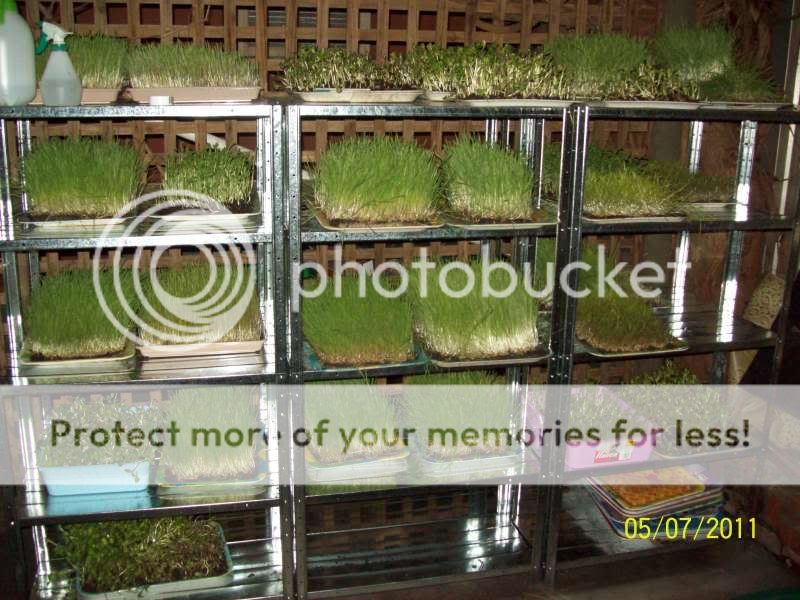
These are sprouts you grow on soil until the cotyledon (seed leave) stage. These are the most nutritious sprouts there are, and include the amazing cereal grasses.

Wheatgrass, barleygrass, ryegrass, oatgrass, speltgrass, kamutgrass, sunflower greens, pea shoot greens, fenugreek greens, chia grass/greens, buckwheat greens (in moderation). ANY green sprout can be grown as a microgreen, but these are the most common.

Legumes:

Lentil, mung bean, adzuki bean, chickpea.

Grains:

Rice, millet, oats. Most other grain sprouts shouldn't be eaten in my opinion.

I've been considering trying teff sprouts if I can find a source for them, but the seeds are so tiny it would definitely be a pain.

Pseudograins:

Quinoa, amaranth

Seeds:

Sesame, poppy, hemp, sunflower, chia, flax, pumpkin (in moderation).

Nuts:

Nuts are tricky to sprout, and walnuts are even more so. I haven't sprouted walnuts myself, but I would if I could find a good source for them (amazing brain food).

Chestnut, walnut, almonds, hazelnuts. Any edible nut can be sprouted but it's difficult to find a good supplier for most of them.


Some of the benefits of specific sprouts:

*Alfalfa: Very high in minerals and very alkalizing, high in chlorophyll.

*Clover: Very good for cleansing the blood and supporting the liver.

*Fenugreek: Great for improving digestion + good for detoxing the liver, and stabilizes blood sugar. Contains some vitamin D3.

*Broccoli: One of the best anti-cancer foods ever discovered; John Hopkins University found that broccoli sprouts contain 20-50 times the amount of the very powerful anti-cancer nutrient sulforaphane as mature broccoli; that means that a tablespoon of broccoli sprouts contains the same amount of that nutrient as a pound of broccoli!!!

*Cereal grasses: Can pick up nearly every element from the soil if they are present (either 95 or 96 I think), great source of chlorophyll, contain the elusive "grass juice factor", best source of phytonutrients ever discovered, and kill EVERY cancer and bad bacteria they were tested against. Great liver detoxifiers and very alkalizing. There are so many other amazing things I could say about grass juice, everyone should drink 6-8 oz of it every day, minimum.

*Sunflower greens: Most balanced source of land protein there is, amazing source of mood-enhancing chemicals, one of the few vegan sources of vitamin D3, a great source of photons (life energy). Everyone should be drinking 6-8 oz of sunflower green juice everyday as well.

*Pea shoot greens: Great source of alkalizing minerals and other nutrients (vitamins, hormones, enzymes, other phytonutrients).

*Buckwheat greens: Amazing liver detoxifier and also a great source of other nutrients, but it does contain a natural toxin called fagopyrin, which causes your skin to become very sensitive to sunlight; best used in moderation.

*Chia greens: Somewhat tricky to grow but absolutely amazing, drinking a glass of chia green juice everyday will make you immune to the cold and send your mood through the roof and make you feel like your in paradise. An very good source of omega-3 fatty acids (36 times more absorbable then from the seed or oil).

*Mung beans: Contain very high levels of extremely potent anti-aging enzymes called "auxinons". Capable of reversing gray hair + hair lose in most people and counteracting most effects of aging.

*Oats: One of the best sources of choline and good for increasing testosterone in men.

*Sesame: Very high levels of many minerals, loads of B vitamins, high levels of vitamin E. 5 tablespoons will almost give you the RDA for iron + calcium (not that the RDAs are accurate, but that's a lot of calcium + iron).

*Poppy: These sprouts blow sesame seed sprouts out of the water. One of the most amazing sprouts there is, it's a huge disappointment that it's illegal to grow in the US.

*Hemp: One of the best sources of omega-3 fatty acids, and the vitamin + mineral content blows both sesame AND poppy seeds out of the water. Also a huge disappointment that it's illegal to grow in the US.

*Walnut: One of the best brain foods there is.


All sprouts have loads of vitamins, minerals, enzymes, hormones, oxygen + other phytonutrients, so I focused on the most unique characteristics of the above sprouts.

^ I'm sure I forgot to mention lots of things too (doing 4 things at once here), but that list is a good start anyway.

Not only does sprouting drastically increase the amount of vitamins, enzymes, hormones, and other phytonutrients in the food, it also drastically increases the availability of many minerals. But the biggest mystery is that sprouts grown in controlled environments (no minerals) will actually have higher levels of minerals then the unsprouted seed which should be impossible according to modern science. I know how it happens, and I'll post the studies that show it soon.

Wow, I guess I got a little carried away. There's loads of other things I'd like to mention about sprouts but I'll have to refrain from saying them all at once.


P.S - changed my mind about the "short post"

Last edited by Living Food; 09-29-2012 at 12:05 PM.
Reply With Quote
  #6  
Old 09-29-2012, 01:55 PM
Observer
 
Join Date: Aug 2012
Location: Wisconsin USA
Posts: 28
Aelphabae is on a distinguished road
Send a message via Skype™ to Aelphabae
Default

Thanks for sharing LivingFood, I have a question about sprouting poppy... What is the difference between the poppy grown to produce opiates and the poppies that are legal to grow as flowers in our gardens?
Reply With Quote
  #7  
Old 09-29-2012, 03:39 PM
Cookie's Avatar
Moderator
 
Join Date: Mar 2009
Location: JerSea
Posts: 1,818
Blog Entries: 14
Cookie has a spectacular aura aboutCookie has a spectacular aura about
Default

Quote:
Originally Posted by Living Food View Post
P.S - changed my mind about the "short post"


I, for one, am very glad you DID change your mind about the "short post."
Great info, I'm really enjoying reading about this!
__________________
The art of medicine consists of amusing the patient while nature cures the disease
~Voltaire~
Reply With Quote
  #8  
Old 09-30-2012, 07:09 AM
Reader
 
Join Date: Sep 2012
Posts: 137
ChrisCarlton67 is on a distinguished road
Default

Quote:
Originally Posted by Cookie View Post


I, for one, am very glad you DID change your mind about the "short post."
Great info, I'm really enjoying reading about this!
I second that! I am just getting into sprouting and I still have a lot to learn apparently!
Reply With Quote
  #9  
Old 09-30-2012, 08:09 AM
Guide
 
Join Date: Sep 2012
Location: USA
Posts: 293
Living Food is on a distinguished road
Default

Quote:
What is the difference between the poppy grown to produce opiates and the poppies that are legal to grow as flowers in our gardens?
The funny thing is, they're the exact same plant (papaver somniferum). It's just going to be a lot harder to buy the seeds in bulk (I buy most sprouting seeds in 25 or 50 pound bags) because the flower shops will probably only sell you overpriced little packets. And it's OK to have a few poppy flowers as ornamentals, but if I was caught with 50 pounds of poppy seed in my house I could get in trouble...
Reply With Quote
  #10  
Old 09-30-2012, 09:23 AM
Guide
 
Join Date: Sep 2012
Location: USA
Posts: 293
Living Food is on a distinguished road
Default

Quote:
Legumes:

Lentil, mung bean, adzuki bean, chickpea.
Forgot the plain old pea sprout (soak 8-12 hours and sprout for about 3 days). But it's much better to sprout them on soil for about 10-14 days and juice them instead for super nutrition.


-----------
Some people try to talk down on sprouts by saying that they have low levels of certain vitamins and some minerals like calcium, and some sprouts do. What these people are missing is that many sprouts have loads of trace minerals you can't find in most other foods (algae and sea veggies have even more), and the nutrients that sprouts do have are FAR more absorbable then those in vegetables or other foods; if you juice the sprouts then you'll absorb almost 100% of the nutrients they have. And sprouts are full to bursting with less well-known nutrients that are equally or even more important then vitamins and minerals, things like hormones, enzymes, oxygen, and rare phytonutrients. Phytonutrients are being called "the vitamins of the future".

Green sprouts + sprouted seeds are the best sources of trace minerals; green sprouts are also the best source of chlorophyll and many phytonutrients. Grasses are even better sources of trace minerals + chlorophyll and the highest source of phytonutrients known to man. Sprouted seeds are the best source of other minerals like calcium and iron, a good source of certain vitamins like B vitamins and vitamin E, and provide important pre-digested fats and calories. Sprouted legumes are a good source of pre-digested carbohydrates and calories, and sprouted grains/pseudograins provide important calories + pre-digested carbs but also B vitamins.

So you should drink lots of fresh grass juice and green sprout juice everyday, and if you really want to bring your diet to the highest level possible have sprouted legume/grain smoothies and eat sprouted sesame seeds for your main meals. If you want to feel like you're in heaven and be happy + joyful no matter what happens, drink 8 oz of chia grass juice most days and also include AFA and chlorella in your diet, and drink as much fresh weed (wild greens) juice as you can. Also include raw sea veggies like kelp and dulse in your smoothies.

This is the best diet humanely possible, nothing else can touch it. You'll be on cloud 10 all day every day and experience levels of well-being and bliss you could never imagine.
Reply With Quote
  #11  
Old 09-30-2012, 09:24 AM
Guide
 
Join Date: Sep 2012
Location: USA
Posts: 293
Living Food is on a distinguished road
Default

Hormones in sprouts:

"Beneficial Effects of Plant Hormones to Human Health

By: Heda Belle Decrito, RN

Plant hormones or Phytohormones are organic compounds that are synthesized in a particular part of a plant and then conveyed to other parts. Even in low concentration, phytohormones are able to regulate the growth and development of plants, as well as affect their ability to differentiate cells and tissues. Phytohormones affect the plants' ability to respond to environmental stimuli. They are also responsible for the plants' longevity and death, time of flowering, as well as in the development and ripening of fruit. Plant hormones are abundant in embryonic plant tissues and not in mature plant cells.

Like plants, the human body also produces hormones and enzymes. In people and vertebrate animals, hormones act as chemical messengers that are utilized by the endocrine, nervous, and immune systems to convey unseen electrical impulses and chemical signals that would facilitate communication within a cell or between cell and/or among system organs. Hormones and enzymes also regulate body functions, control human behavior and integrate systemic functions – nervous, immune and endocrine systems, etc.

Plants cannot benefit from human hormones; however, plant hormones can do wondrous health effects to human health. Laboratory findings show that plant hormones can stimulate human immune cells that boost the body's natural defense against stressors and diseases. There are three types of plant hormones that have shown promising benefits to us humans - Plant Growth Hormone (PGH), Plant Stress Hormone (PSH) and Plant Immune Hormone (PIH).


Plant Growth Hormone

As the name suggests, plant growth hormone regulates plant growth and development. There are 4 plant growth hormones with known beneficial effects to humans – Gibberellins, Auxins, Brassinosteroids, and Cytokinins.

Gibberellins (GAs) are plant growth hormones that are found mainly in the buds and young shoots. When extracted from these embryonic plant parts and incorporated in PSC therapy, gibberellins are able to offer numerous health benefits. GAs stimulate RNA and Protein synthesis. Gibberellic acid also aids in drainage, a process characterized as detoxification by means of organ stimulation, tissue excitation and toxins elimination.

Auxins are plant growth hormones that are involved plant-cell elongation. A well-known natural auxin extracted from plants is Indole Acetic Acid (IAA). Research shows that auxins have fetal hormonal action. They also stimulate cellular growth and provide better resistance to disease. The IAA in auxins acts as an antiinflammatory and helps tissue to regenerate. Also, when used in combination with the plant enzyme peroxidase, Indole Acetic Acid can produce byproducts that are toxic to cancer cells, yet harmless to healthy cells.

Another plant growth hormone is Cytokinin. Cytokinins provide protection to the cells as they undergo cell division (mitosis). DNA is constantly copied as the cells undergo division. Cytokinins prevent the mistranslation of the DNA molecules during the replication phase, making each cell a mirror image of the other divided cell. Cytokinins are also known to inhibit senescence. They can slow down the aging process by inhibiting the breakdown of proteins through the stimulation of RNA and protein synthesis.

Brassinosteroids are similar to animal steroids in many respects. However, at the cellular level, they appear to function differently. The most abundant brassinosteroid found in plants is Brassinolide, which was first isolated from the pollen of Brassica Napus. Brassinolide can act synergistically with auxins gibberellins and other hormones. Brassinosteroids are used safely and successfully for lowering serum cholesterol levels.

Plant Stress Hormone (PSH)

Plant stress hormones are responsible for activating the plants cellular response to diverse stress situations, including cell death. They are made in the cells of the plants that are faced with a massive scarcity of nutrients. Abscisic acid, ethylene, Jasmonic acid and salicylates are the most common PSHs that have shown positive health effects to humans. Researchers have found that these plant stress hormones, like any other anticancer hormones, have the ability to adversely affect human cancer cells.

Jasmonic acid suppresses and destroys major types of human cancer cells. Jasmonic acid is helpful in preventing and treating vaginal and/or reproductive problems in mammalian females. Jasmonates facilitate the renewal of the regressing vaginal mucosa and prevent vaginal wall dryness.

Plant Immune Hormone (PIH)

Plant immune hormones are organic compounds that trigger the plant's immune response to bacterial, fungal and viral infections. Some of the most common PIHs are Salicylates, Auxins and Jasmonic acid. Salicylic acid is the primary immune hormone found in plants, which have antipyretic and antiinflammatory properties.

Acceleration of wound healing and rehabilitation following injury and reversal of biological and physical effects of aging are just some of the numerous benefits that plant hormones have to give. Plant hormones also reverse muscle wasting, improve vision kidney, liver and other organ function, improve memory retention and other cognitive factors, reduces stress and enhances the immune system, as well as promote tighter, younger and more supple skin.

Contrary to Human Growth Hormones, which pose the risk of cancer, embryonic plant extracts do not pose such risk. Nor will it affect the function of the pituitary gland as in the use of human growth hormone."

All of these are present in abundant amounts in sprouts but very low levels in the mature plant.
Reply With Quote
  #12  
Old 09-30-2012, 09:34 AM
Guide
 
Join Date: Sep 2012
Location: USA
Posts: 293
Living Food is on a distinguished road
Default

I was hesitant to mention this at first because many people are too close-minded to believe it, but the best part of sprouts isn't the vitamins, or the minerals, or the enzymes, oxygen, other phytonutrients, or chlorophyll. It's the electromagnetic vibration - the "life energy" present in the sprouts. A raw, mature plant has some life energy (cooking destroys it), but after it has been sitting in the store for weeks then most all of it is gone. But sprouts have massive amounts of life energy because they are growing rapidly, and they are still alive + growing right up to the point you bite into them or put them through the juicer. It is this high vibration that causes such amazing health and feelings of well-being in those that eat them. Green sprout juices are absolutely loaded with life energy and are he best source there is. The juice of freshly picked weeds is also loaded with this life energy, and weed juice has huge quantities of rare trace minerals and other nutrients, plus weeds have a special vibration that other foods don't.

Most powdered green foods that are sold as "superfoods" have essentially no life energy left, but powdered algae + sea veggies still have good amounts of it because they have a unique cell structure that preserves it for a long time. That's why they are the only wholefood supplements you should take.

Why bother buying powdered alfalfa sprouts or wheatgrass anyway? You can grow the real deal for a fraction of the cost and it will have many more nutrients then what you can buy at the store. Algae are different becuase they are nearly impossible to grow yourself (there are kits that let you do it, but it's too much of a hassle) and have important nutrients that land-based foods don't.
Reply With Quote
  #13  
Old 09-30-2012, 05:07 PM
Enlightener
 
Join Date: Oct 2010
Location: Sunny, tropical, CA.
Posts: 993
mommysunshine is on a distinguished road
Default

How do you keep mold/fungus from growing on your sprouts. We are always keeping away from high fungal foods like peanuts and sprouts tend to be moldy too.

I tried blended sprouted lentils but it tasted terrible. It caused bloating and gas so I didn't like it. Your body thrives on grain and bean sprouts blended? No gas?

Will white rice sprout or does it have to be brown?

Where do you buy your seeds from?

Ok, one last question, what type of sprouting system do you use? It must be pretty elaborate. I have the Easy Green Sprouter and do love to make radish and fenugreek sprouts. Onions always mold though.
Reply With Quote
  #14  
Old 10-01-2012, 03:06 PM
Guide
 
Join Date: Sep 2012
Location: USA
Posts: 293
Living Food is on a distinguished road
Default

Quote:
How do you keep mold/fungus from growing on your sprouts. We are always keeping away from high fungal foods like peanuts and sprouts tend to be moldy too.
You need to rinse most sprouts 2 or 3 times a day and not oversoak them. If necessary you can use a high-pressure water squirter to really blast all of the mold and bacteria of your sprouts, but I've never had to do that.

Also try mixing hydrogen peroxide into the soak water of your sprouts (very effective). If you're growing microgreens then also use a teaspoon of H2O2 per 2 cups of water and spray them with that every other day. You can also water them with the mixture.

Sprouts are never moldy if grown right, but many automatic sprouters have design flaws (none are perfect) so your sprouts could get a little moldy because they don't drain well.

Quote:
I tried blended sprouted lentils but it tasted terrible.
Yes, sprout smoothies are an acquired taste, but after a few weeks you'll get used to it and they'll start tasting good to you. Try eating huge bowls of a strong green sprout before dinner every night and pretty soon you'll lose taste for your main meal and start to like the taste of sprouts.

Quote:
It caused bloating and gas so I didn't like it. Your body thrives on grain and bean sprouts blended? No gas?
How long did you sprout the lentils for? You need to sprout them for at least 4-5 days to make them easy to digest and remove nutrient inhibitors. You can also take digestive enzymes with sprouted legumes to make them easier to digest if your digestive system is weaker.

Most people have weak digestive systems today for various reasons (I was the same). You can fix that by:

*eating lots of fermented foods
*drinking lots of fenugreek sprout juice
*taking good probiotics
*doing a good colon cleanse
*doing daily enemas + wheatgrass juice implants for a few weeks, then you can taper it down to every few days.

Proper food combining also makes digestion much easier.

I used to have horrible digestion and even got pain + bloating from eating fruit, but by following the above program I can now digest anything with ease. As an added bonus you might be able to get all the b12 you need from your gut bacteria after doing this - it worked for me and it worked for Viktoras Kulvinskas (another sproutarian).

Quote:
Will white rice sprout
No.

Quote:
Where do you buy your seeds from?
Azure Standard; they have some of the lowest prices I've ever seen + very good quality, and if you live in certain states your shipping cost will only be 8.5% of your entire order. I used to buy from sproutpeople.org but their prices are insane compared to Azure Standard's.

Quote:
Ok, one last question, what type of sprouting system do you use? It must be pretty elaborate.
Just jars + trays. Lots and lots of 'em. There are lots of automatic sprouters out there, but I prefer not to use them for the reasons I mentioned above. I also like the feeling of growing all my sprouts by hand with tenderness + love - and it actually does make them more nutritious and taste better, too. It is time consuming, but it is absolutely worth it; after you've been doing it for a while the boundless energy shows up and life becomes great + you'd never imagine NOT doing it, and you actually get to enjoy it after a while.

Some folks watch tv, I tend to my sprouts. I also only need 2-4 hours of sleep a night, so in the end I actually have more time by living this way then I otherwise would.

My sproutarian friend only sleeps 90 minutes a night, but that's because he meditates for hours every day; I'm going to be like that too soon.
Reply With Quote
  #15  
Old 10-03-2012, 09:44 AM
Reader
 
Join Date: Sep 2012
Posts: 137
ChrisCarlton67 is on a distinguished road
Default

90 min a night? I can't imagine....

Thank you SOOOO much for all the extra tips and information. I may have to look into an automatic sprouter, because I don't know if I will be able to find the room for mason jars.... well, I guess I could start with 1 and go from there
Reply With Quote
Reply Bookmark and Share

Tags
sprouts

Thread Tools
Display Modes


Similar Threads
Thread Thread Starter Forum Replies Last Post
Ron And The Pea Sprout Cookie Chitchat 3 08-12-2010 03:06 PM
Broccoli Sprout Extract Combats Bladder Cancer Harry Hirsute Cancer 1 04-10-2008 10:49 AM
Brussels Sprouts May Prevent DNA Damage Harry Hirsute Cancer 0 03-09-2008 04:11 PM
Broccoli sprouts inactivate carcinogens Xania Cancer 3 11-25-2007 04:10 PM
Alfalfa Sprouts? EarlyBird Nutrition 3 10-02-2006 08:19 PM